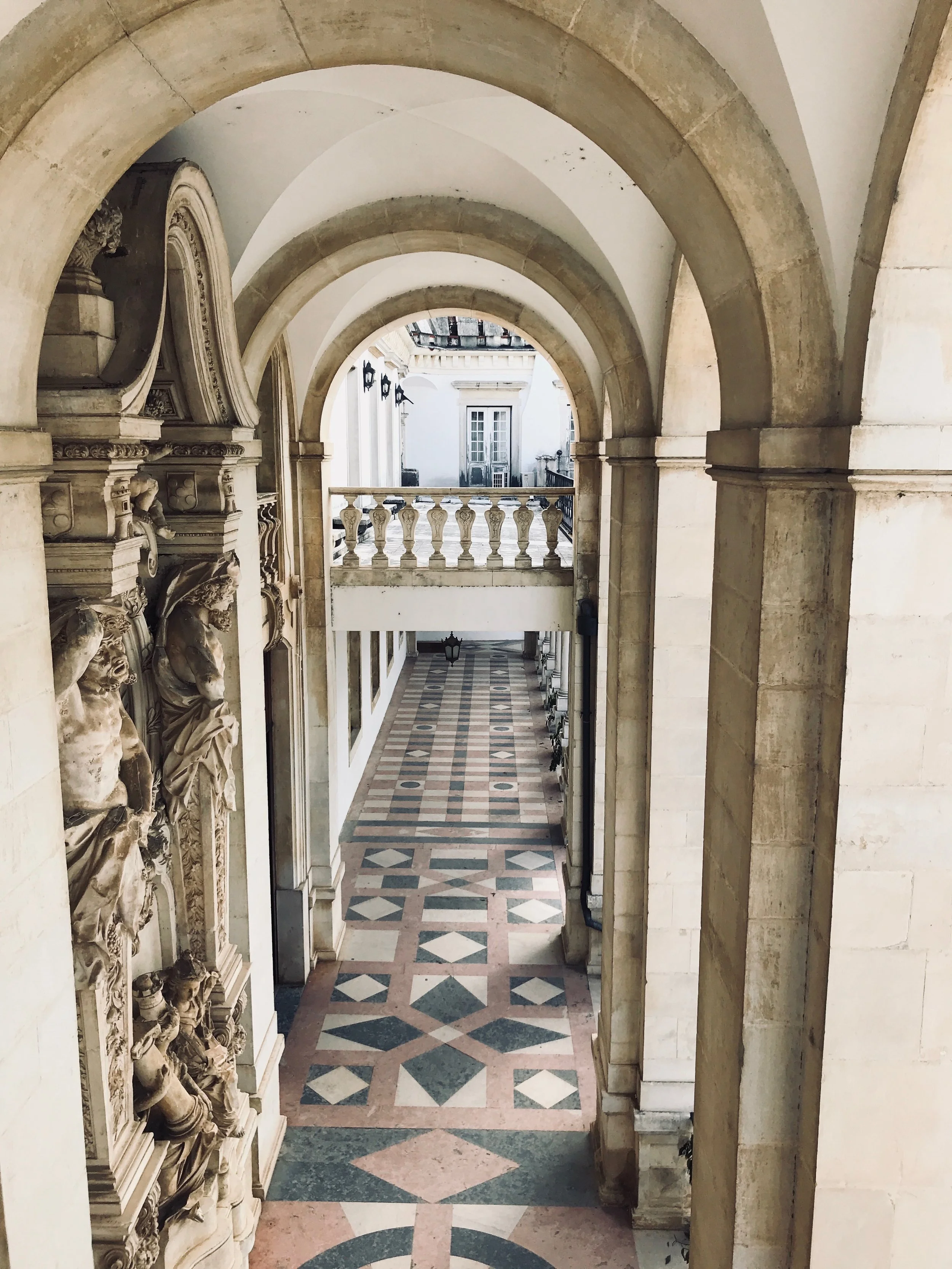
Azores - 2018

Archipelago in the Atlantic comprised of nine islands that is stunning and still pretty unknown. Very few people back home knew anything about the Azores when we mentioned that we would be traveling there. But that will change soon enough since more direct flights from the US and Europe are becoming available. It was one of our favorite places in our Portugal journey! We went in June and that was a great time of the year. Already warm enough but not too warm, and still not so crowded with summer travelers. My sister Gabi and friend M joined us and we had a blast. 

We took a 2 1/2hr flight from Porto to our first island:

São Miguel

Sao Miguel is the largest in the Azores. Though remote, the island offers a wide variety of experiences: charming small towns, hiking around lakes & to waterfalls, farm fields with grazing cattle everywhere one looks, iron rich hot springs and mile after mile of hydrangea lined roads. Definitely rent a car to explore the island. 

Below is a day-by-day itinerary.

DAY 1 We arrived mid-afternoon in Ponta Delgada and got settled into our hotel. Then we went to explore the old town, which was walking distance. Ponta Delgada is a quaint town with many charming buildings and good infrastructure of shops & restaurants. You don’t need more than a few hours to see the town but it’s a great first stop. 

STAY Azor Hotel [modern design hotel, with a rooftop pool & bar with great views of the harbor area. It offers a very good breakfast. Be aware, however, that you will be sharing the hotel with big tour groups, that can get overwhelming, if you happen to be trying to eat at the same time]

EAT Tasquinha Vieira [favorite restaurant in São Miguel; does not take reservations]

DAY 2 This day is to explore the west side of the island, towards Sete Cidades. We got lucky and had good weather otherwise we would not have seen the beautiful vistas that can be blocked by clouds. Our first stop was the Miradouro da Vista Do Rei (King’s Viewpoint). From there you will get your first glimpse of Lagoa das Sete Cidades (Sete CidadesLagoon), the most well-known postcard of the Azores. It seems like you are seeing two lakes but it’s actually the same lake separated by a bridge, that reflect the light differently due to the surrounding vegetation. Sete Cidades is a volcanic crater formed 22,000 years ago. 

The next stop is Miradouro da Boca do Inferno (Hell’s Mouth Viewpoint) which offers jaw dropping viewsof the mountains and sea in the background & two other lagoons: Rasa and Santiago. To get there drive another 10 minutes following the signs to Lagoa do Canário. You’ll notice a car park on the right, where a hiking trail begins, and on the opposite side the entrance to a dirt road. You can drive in or park the car and walk to a set of stairs. If you want to do a hike from Mata do Canario to the small village of Sete Cidades, park by the aqueduct of Muro das Nove Janelas (Nine Windows Wall) just down the road. You will hike on the rim of the crater of Sete Cidades with more wonderful views. We did part of this hike and was worth the climb. 

The next stop is the village of Sete Cidades by the lake. Everything seems untouched for decades, and it’s worth a stroll around it.  From there continue to the town of Mosteiros on the coast. It’s a beautiful drive there and there are some natural pools by the rocky beach if you care for a swim. The final stop of the day was Ponta da Ferraria which is a small cove surrounded by lava rock cliffs where the ocean water is warmed up by a geo-thermal natural spring beneath. Please note that there is a man-made pool on site but you want to walk a bit to the natural pools. We happened to be there on a Sunday, so it was packed with locals – whole families from kids to grandparents were spending their Sunday swimming & picnicking. Not very relaxing, so if we had to do it again, we would go earlier or much later in the day and on a weekday. 

STAY Azor Hotel [same hotel; make sure to get a gin & tonic by the pool late afternoon; great way to wind down from the busy day of touring around]

EAT A Tasca [we tried to eat at this restaurant since it was highly recommended but it was completely full. We went to another non-memorable place, so make reservations!]

DAY 3 We left Ponta Delgada this morning to make our way to Furnas towards the east. First we went to Porto Formoso to vist a tea plantation. Make sure to stop at Miradouro de Santa Iria on the way. It’s a well-known viewpoint with clear views of the northern coast. 

Our next stop was Gorreana, the only tea plantation in Europe, working since 1883, which produces black and green tea. You can walk around the processing plant on your own and taste their teas. It was shocking for an American, to be allowed to walk around operating heavy machinery and in the midst of workers trying to get through their tasks, without any limitations. Our favorite part though was the hiking trail weaving through the tea plantation across the road. The scenery is stunning, overlooking the sea and most tourists skip this hike, so you’ll have the trail mostly to yourself. It can get pretty steep at times, but it’s worth the effort. It’s a 3.5km loop and about 1-hr long. We skipped this, but there’s another tea plantation down the road – Porto Formoso– which offers tours of the sister-factory to Gorreana. It’s less famous and with less tourists. Another thing we did not do is go to the beach at Porto Formoso. It’s a dark sand beach off the beaten track. From there we made our way to Furnas, our home base for the next 4 nights. 

STAY Furnas Boutique Hotel [another modern design hotel, with a thermal pool, great ambiance and a good restaurant]

EAT We just stayed at the hotel for dinner. Get a table on the covered patio outside and make sure to go before dinner for drinks on sofas out there. Quite pleasant! Just be prepared for poor service – very friendly servers – but pretty clueless. And that was the case every night.

DAY 4 This day we started with a wonderful hike from Paia near Agua d’Alto to Fogo Lagoon. The trail – PRC2- starts on a beaten earth track, in a zone of pastures. The trail is well marked – always follow the red/yellow stripes – and will go through steep and opens areas, also flat wooded areas with my favorite being a stretch along a “levada” (water channel). During the ascent there are several places with magnificent views of the Southern coast of S. Miguel. It’s a moderate hike with some steep climbs. It took us about 3hrs total. 

STAY Furnas Boutique Hotel [this was the day for a massage at the very nice spa at the hotel]

DAY 5 Today we made our way to the Northeast of the island, the wildest and most remote in São Miguel. The vegetation is thicker, the sea cliffs are steeper and the roads are more sinuous. Our first stop was Farol do Arnel, the oldest lighthouse in the Azores. The road down to the lighthouse is extremely steep, so I recommend you go on foot and don’t try to drive it. There are many viewpoints along the road, but here are two we stopped at: Miradouro da Ponta do Sossego and Miradouro da Ponta da Madrugada. Both are very similar and afford gorgeous views of the coast. Our initial plan for this day had a 2-hour hiking trail from Faial da Terrato Salto do Prego (trail PRC-9), that leads to a waterfall in the middle of the forest. But for time sake we skipped it and went straight to Vila Franca do Campo. It’s a charming town along the Southern coast. 

From there you can take a boat to Ilhéu da Vila, an islet 10 minutes away. It encloses a bay perfect for swimming or snorkeling. The boat connection only operates during summer months and gets sold out fast. You can catch the boat the marina in Vila Franca do Campo.If you don’t go to the island, continue on to Caloura, a small village nearby, for a late lunch at Bar Caloura. You can also go for a swim on the natural pool across from the restaurant. 

STAY Furnas Boutique Hotel

EAT Terra Nostra Hotel [we went to dinner at this hotel nearby; very nice dinner, more upscale than at our hotel; go for a walk at their amazing garden after dinner]

DAY 6 One of the main attractions in São Miguel is the hot spring waters and pools with mineral rich water. This morning we went back to the Terra Nostra hotel. It has a wonderful tropical garden with a trail that meanders through it. We went there as soon as it opened to the public, I believe it was 9am, and did the walk before big groups arrived. We also got to bathe on two hot springs hidden in the garden. The main huge geothermal pool with murky brown water due to high iron content, was not appealing to me but my sister and husband were brave enough to try it out. 

This afternoon you can visit the Lagoa das Furnas, one of the three main lagoons in São Miguel. There is a hike to a gothic church sitting in the west shore with beautiful views. 

STAY Furnas Boutique Hotel [last night at this hotel; we will wake up early tomorrow and drive straight to the airport to fly to Pico]

These are some other hotels that have opened recently and look amazing. They were non-exist when I make bookings for the Azores almost a year prior, but if I’d go back, I would definitely check them out: White Suites & VillasSanta Barbara Eco-Beach Resort.


Pico

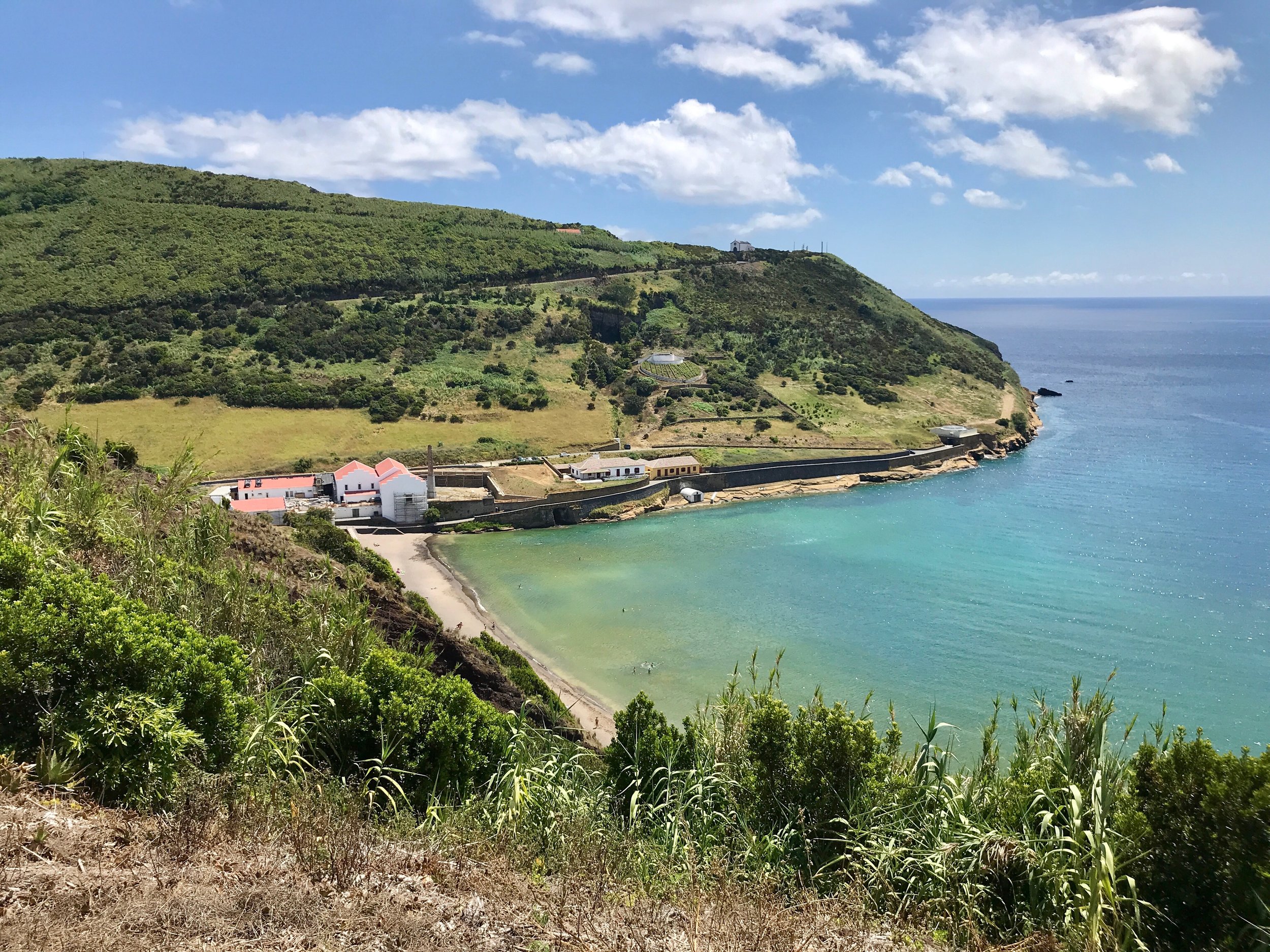
Pico is the second largest island in the Azores, with a pretty tall volcano at it’s center called Pico (highest peak in Portugal), and black lava rock spread around the entire island. It is known as the black island. Wine production plays an important role in Pico’s culture since the 15thcentury, with UNESCO protected vineyards in the midst of lava rock. It has great natural swimming holes and lots of hiking options.

We flew to Pico from São Miguel and it’s a short 45-minute flight. 

DAY 1 Wine Tasting & Sightseeing Tour [we took a private tour with Tripix as soon as we arrived in Pico to get the lay of the land. We had Raisa as our guide, one of Tipix’s owners and a high energy Brazilian very passionate about the island which now she calls home. We started by visiting a typical vineyard in Criação Velha which comprises of man-made lava stone walls (currais) laid out in grid formation with the vines growing on the basalt rock in the between the walls. This was created in order to protect the Verdelho grapes from the harsh winds and seawater. From there we went to the Cooperativa Vitivinícola do Pico where they produce 80% of Pico’s wine. We got a tour and tasted most of their wines. After that we went to tour a cave – pitch black with no illumination except for our flash lights and pretty treacherous terrain - an experience you would never have in the US due to liability concerns J. By now we had to stop for lunch – Taberna do Canal -  before we drove towards the middle of the island to see the beautiful landscapes at the base of the volcano. Surprisingly a very green area with cows grazing everywhere. The Pico the Urze was a great viewpoint of the area. Our final stop was the charming little village of Lajes with a beautiful spot with natural pools] 

DAY 2 AM:Swimming [we just went to the swim hole in front of our hotel and spent a relaxing morning] PM:Swimming with Dolphins [aquatic wildlife around the Azorian islands is fantastic. This was my opportunity to swim with dolphins in the wild and not in a tank, which I refuse to do. Our group took a tour with CW Azores and they took us on a speedboat to the area where the dolphins are swimming at – could be 30 minutes away or 1 ½ hours away. When we found them, 2 people at a time get to jump into the water with goggle and snorkels and swim close to the dolphins. When we were there it was breeding season and a lot dolphins had babies with them, so they would mostly take off when they saw us. Still a fun experience] 

DAY 3 AM:Whale Watching[even though the weather was not great, we had signed up for a tour with CW Azores, so went for it. Not a super fun experience – pouring rain, open boat, wet & cold, very bouncy sea which made all of us really dizzy for the remainder of the day. However, if the weather was nice, it would probably have been a much better experience, even though watching whales was not as fun as with dolphins. They hang at the surface of the water with most of their body submerged oxygenating it and then they dive to feed and don’t resurface for more or less 30 minutes depending on the species. The best part is when they dive and you get to see the tail sticking out. A lot of waiting around so patience is required] PM:Exploring the stone villages [we drove towards São Roque and stopped at Cachorro, Lajido and Cabrito. Cachorro was our favorite – park the car and walk around. There are also swim holes in all these villages]

EAT Cella Bar [in Madalena, with a roof deck offering views of Faial island; the food is okay but the setting makes it worth a visit] Casa Ancora [in São Roque, it has a Nordic vibe and a more modern take on local dishes] Ancoradouro [in Madalena, with an outdoor area right by the water. Good seafood] 

STAY Pocinho Bay [charming hotel right by a natural swim hole & tiny beach. We rented the 2-bedroom villa and it was really beautiful. The couple who owns & runs the hotel is a bit peculiar, and has their findings from traveling around the world spread out through every room of the hotel]

Faial

Faial is another island worth visiting, just a 30-minute ferry ride from Madalena. It is the third most populous island in the Azores, with the principal settlement of Horta that offers lively bars & a quirky marina. In summer, yachts from all over the world make anchor in the marina, taking a break from their travels across the Atlantic. The marina barriers are completely covered in colorful paintings, as sailors believe they must paint a mural to bring good luck to their voyage.

Faial has two key natural attractions 1 > Caldeira:  the dormant crater at the center of the island, which offers beautiful views; 2 > Capelinhos: a fairly recent eruption site (1957), where the nearby lighthouse became submerged in layers upon layers of dust and rock, with only its tower ultimately still standing above ground. This lighthouse was turned into a museum with part of the building still underground. It’s worth climbing to the top of the lighthouse for panoramic views of the barren landscape that will make you think you’ve landed on the moon. 

 DAY 1 We arrived in Horta at mid-day, and just explored the town and got comfortable at the apartment we rented.

DAY 2 We made our way to Capelinhos and stopped at the following swim holes along the way – Lajinha [just park on the side of the road and walk a bit through the black rock to find a few natural pools] Porto do Varadouro [you will have to get off the main road and drive down a windy road towards the beach. Once you park there is a path that takes you straight to a large swim area. Take the left pathway instead that will take you a smaller natural pool. It has a trampoline. Our favorite one!!] Porto do Comprido [swim area just down the hill from Capelinhos]. 

From there we drove to the Caldeira, which means “boiler”, a beautiful drive up the mountain to the biggest volcano in Faial. Its diameter is about 2 kilometers and it’s an 8- kilometer walk to circumnavigate it on foot. If you don’t want to do the full hike, make sure to at least walk about 20 minutes to the south, and you will walk along cow pastures with incredible views of the island looking towards Horta and Pico on the background, and also of the Caldeira on the opposite side. Be ware that the Azores has rapidly changing climate and it can go from bight sunshine to cloudy/rainy/windy weather in just a few minutes, so make sure to bring layers.

DAY 3 We went sailing this morning and it was beautiful and relaxing. We booked a sailboat through Sail Boat Azores  - http://www.sailboatazores.com- and it was a gorgeous boat. For a ½ day we paid 55 Euros each and had the boat to ourselves. 

In the afternoon, we went on a hike in Horta called Entre Montes – trail PRC8FAI. It is a circular route between Montes da Guiaand Queimado, places of historical importance in Faial. Because of its strategic location, the peninsula was vital in the development of the telecommunications between Europe and the United States, where, in 1893, the first underwater telegraphic cable was installed. It worked until 1969 and during crucial periods in the World Wars. We started the trail right behind our apartment at Rua da Rosa. Almost at the end of the road you will see a trail starting to the right, which will take you up Monte Queimado. You will get a great view over the marina of Horta. At one point you will start making your way down towards Porto Pim beach. It's steep and can be slippery, but the views of turquoise Porto Pim Bay are stunning.  Walk along the back of the beach and a parking lot and pass by the Observatório do Mar dos Açores on your right before you go up until the viewpoint of Lira. Continue on to the chapel of Nossa Senhora da Guia. Follow the marked trail that will loop back down and pass by the Porto Pim Aquarium. You’ll end up at Porto Pim beach, sweaty and ready for a swim!

EAT Peter Sport Café [legendary spot among sailors who go to Horta, that was celebrating its 100-year anniversary always on the same location. Its walls are filled with sailing memorabilia from flags to historical photos and the food is quite good. You can also sit outdoors overlooking the marina.] Praya [restaurant with beautiful architecture right on Praia do Almoxarife] Genuíno [a bit pricey for what it is, but serves good food. A reservation is recommended unless you get there around 7 or 7.30pm] Oceanic [a fun bar that serves decent food. They have live music on the weekends]

STAY Porto Pim Bay Apartments [nice one, two or three bedroom apartments on Porto Pim Bay, a shallow cove great for swimming with a sandy beach, which is rare on this island]

*Thank you to all my contributing photographers: Michael, MP & Gabi
Galicia - 2018

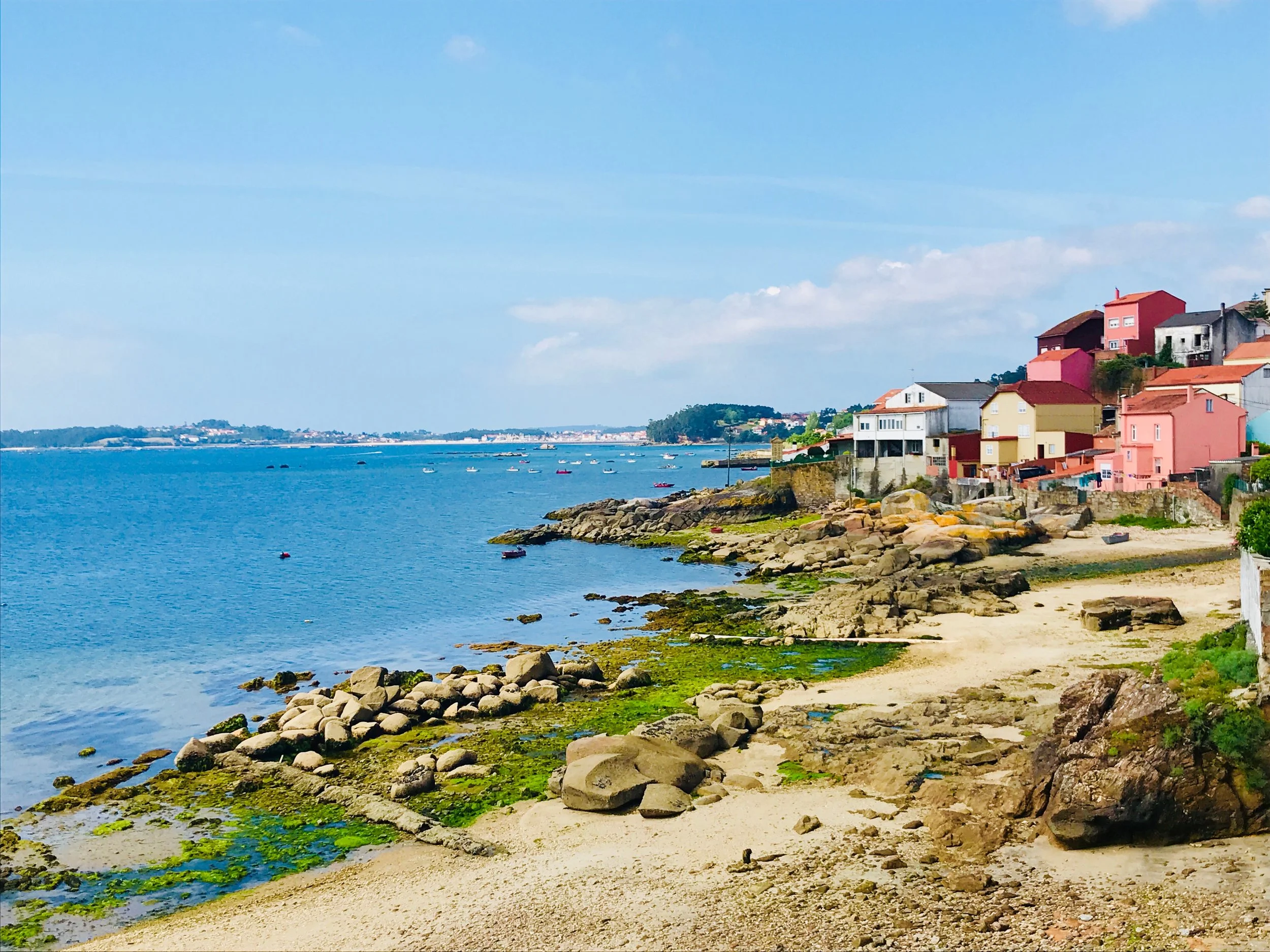
Galicia is in the northern corner of Spain, just above Portugal. It’s mostly known for its rugged coast, beautiful beaches & seafood and it’s not overly touristy. A great combo! The coastal area is called the Rías Baixas, which is comprised of five estuaries that line up the Atlantic Coast looking like fingers sticking out into the ocean. Each Ría has its own character: Ría de Corcubión is the most northerly, smallest and rarely visited; Rías Muros Y Noia and Arousa are the richest in seafood; Ría da Pontevedra where the capital of the region is located – Pontevedra; and Ría de Vigo is the widest and harbours the magical Ciés islands. 

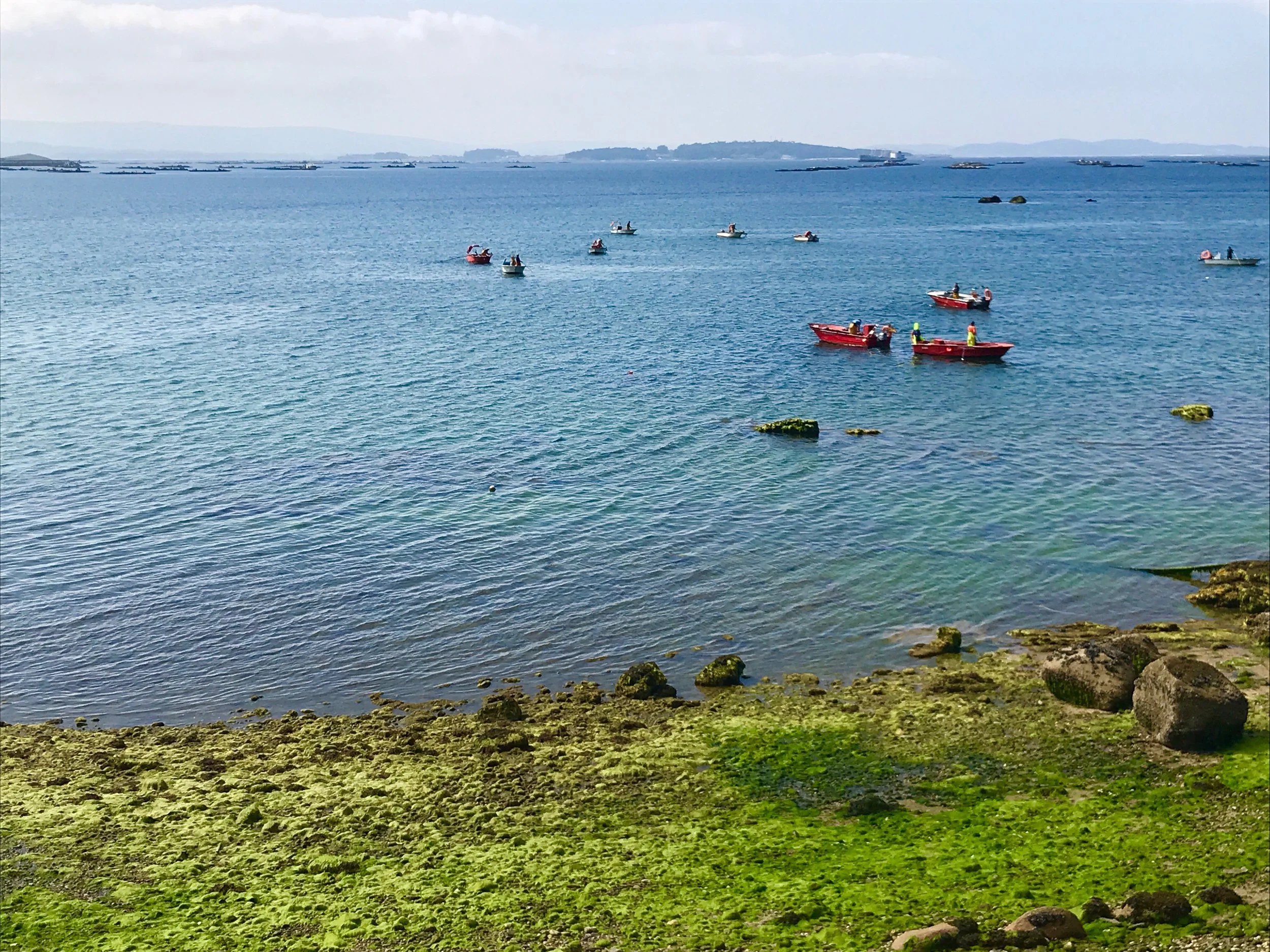
We rented a modern house near the town of A Pobra do Caramiñal in the A Coruña province - Dezanove House - www.dezanovehouse.com- and that dictated a lot of what we did in the area. The outside walls of the house are made of reclaimed eucalyptus wood from the “bateas” and it’s a very unique house in the area. It’s at a beautiful setting with views of the Ría Arousa and within a very traditional neighborhood, so you will get a good sense of every day life. Warning: roosters early in the morning and lots of barking dogs around. You have access across the street to a small cove used most mornings by fishermen looking for clams]

TO DO

Visit the Ría Arousa (Arousa Bay/Estuary) via water taxi [we were able to get close to the “bateas” that are mussel production platforms that you see sprinkled along the estuary and that constitute one of the most important local industry. We learned how the mussels are grown & harvested and it’s a fascinating process and hard work! We also got to see up close the small boats with locals manually harvesting clams, and learn how it’s done, how the clams are selected & priced. After the educational portion was over, we moved on to see beautiful islands with lighthouses; Caribbean-like beaches and stopped for lunch at Isla Arousa. It was a wonderful ½ day tour +34648458116 (Jesus) www.oceanicarousa.com]

Natural pools of Pedras River [there are various pools to pick from as you walk the mountain along the river. Not necessarily easy to find but worth the effort. Ask locals for direction or if you get lucky follow them on the short trek, like we did, that leads to the pools. It’s especially sunny during the middle of the day, so pack some snacks, sunscreen, bug spray and towel, and go for a swim. Warning – it will be a cold one!]

Dunes of Corrubedo + Lagoon [follow signs to the Dunes of Corrubedo and they will lead you to a parking lot. Walk the 2km dirt road that will lead you to the lagoon. Don’t bother taking the narrow trail to the dunes at the end of the parking area. You cannot walk on the dunes, so what you see from the parking lot is what you will see from the path. The lagoon is stunning and the beach next to it as well. Highly recommend it!]

Towns worth a visit: Combarro [pretty fishing villageon the Pontevedra estuary, with rustic stone houses that line the seafront, and the hórreos, traditional granaries built in wood or stone and raised on pillars] Cambados [small coastal town considered the capital of Albariño wine – it is packed with bodegas, 16th-century renaissance-style squares, baroque facades, ruined churches and old granite mansions] Baiona [picturesque because of its sweeping bay and beautiful Monterreal Castle] Santiago de Compostela [world heritage site with a lovely well preserved old town and it’s very famous cathedral – the final destination of the pilgrims walking the Camino de Santiago. By far the most interesting town we got to see during our stay in Galicia. Within the old town there are many narrow winding streets full of historic buildings and the new town – with less character - is all around. Don’t miss Parque Alameda, a lovely park with great views of the old town & cathedral. The old town is where you will spend most of your time: wander around, visit the cathedral & the Mercado Abastos – food market. You will probably see a very modern complex of buildings on a hill, called the City of Culture. Although at first it looks like an appealing site, at least from an architectural point of view, after visiting it, the sea of hardscape with the ground and buildings all made of the same stone, makes you want to get out of there fast. So unless you have a reason to go there (library, museum, a concert), you can skip it]

Fundación Manolo Paz [a sculpture garden where artist Manolo Paz exhibits his works, mostly large scale and made of granite, overlooking an inlet of the Ría Arousa. A very special place! Make an appointment beforehand for a visit]

Beaches [there are gorgeous beaches all over Galicia but be warned that the water is cold. Everybody recommends a visit to the Cíes islands with its famous crystalline water & white sandy beach named Rodas. For something a little less tourist-trodden and equally beautiful got to the Ons islands. It also has a great selection of beaches, from pristine white sands to more rocky and rugged bays. We unfortunately did not get to visit either since we got a bit unlucky with the weather]

EAT The food in Galicia was not as exceptional as we expected. At almost every restaurant we visited the menu is about the same – hake fish with potatoes, grilled octopus, fried calamari, mussels and razor clams, a salad of lettuce, tomatoes & onions. Vegetables or any other greens are almost impossible to find at a restaurant. Don’t get me wrong, the seafood is fresh, but the menus are just too predictable.

O Xanxo- Proba do Caramiñal [nice courtyard & good food] Benboa– Corrubedo [good restaurant for tapas and seafood at the port of Corrubedo] Culler de Pao– O Grove, Pontevedra [Michelin star restaurant with the most creative meal we had in Galicia. And not expensive at all for what you get] Abastos 2.0– Santiago de Compostela [fun spot located in the refurbished old town food market] Casa Marcelo– Santiago de Compostela [Michelin star restaurant next to the Santiago Cathedral. We missed it but the tapas are supposedly incredible]

Portugal Part 6 - Douro Valley/Porto - 2018

Douro Valley

The Douro Valley is spectacular and worth more than just a day visit from Porto. We stayed at a very remote part of eastern Douro Valley, near Vila Nova Foz Coa. Our hotel, Casa do Rio, was fantastic - intimate & peaceful - only 8 rooms & 2 cottages, at a gorgeous setting, with beautiful dinners & great wines. But there was not much to do there besides walking around the surrounding vineyards, sitting by the infinity pool or kayaking on the river. If you want to mostly relax, this place is a must! But if you want to explore the Douro area and go wine tasting & check out restaurants, a better option would be to stay at Quinta do Vallado or Six Senses near Peso da Régua. 

After a couple of days of pure relaxation, we drove from Casa do Rio to Porto, our next destination. We recommend taking the N222 route, that even though longer, it's quite scenic all the way to Peso da Régua. 

While in Porto we had friends visit who wanted to see the Douro Valley, so we took a day-tour from Porto and it was great. This is the tour booked through airbnb Experiences: Wine Venture & Sailing in Douro Valley - www.airbnb.com/experiences/160799. Ricardo was our lovely guide. We got to visit off-the-beaten-path wineries, sail on the Douro & drive around some beautiful landscapes. 

Porto

Porto is much smaller than Lisbon, full of history, beautiful monuments, nice parks & great beaches nearby. We unfortunately stayed in Porto for 9 days and all of them cold & with rain. And this was June!

SEE/DO

  1. Like most places, the first thing I recommend is to wander the streets, get lost and get a feel for the place. This is the best way to discover some beautiful vistas, interesting shops & architecture, good cafes & quaint streets.
  2. The second thing I usually recommend is a food tour. This all-day tour with Culinary Backstreets - https://culinarybackstreets.com/tours-food-tours/tours-porto/2018/beyond-barrel-decadent-home-heart-porto/ - will provide you with great knowledge of local history & you will also get to taste local dishes at ‘holes in the wall” you would never discover otherwise. Not to mention that you will walk all over the city. 
  3. Walk across the Dona Maria Bridge, a stunning bridge designed by Gustave Eiffel and then hike up to the Mosteiro da Serra de Pilar which offers unbelievable views. You will then be on the other side of the river – Vila Nova de Gaia – where all the port tasting. Mercado Beira-Rio is a great food market if you need a snack after all this walking!
  4. Rua Miguel Bombarda, the new art street lined with galleries.
  5. São Bento train Station with its interior adorned by the famous typical blue Portuguese tiles.
  6. Livraria Lello is a historic art noveau bookstore that served as inspiration for the library in Hogwarts, Harry Potter. Extremely tourist with huge lines to get in and you have to purchase tickets prior to getting in line. Go early in the morning if you want to actually visit this place without the crowds! 
  7. Crystal Palace Gardens is a lovely park to walk around and take advantage of the several viewpoints that offer wonderful panoramic views of the city.

STAY I’m not a big airbnb fan, since they are usually disappointing, but the house we rented in Porto - www.airbnb.com/rooms/17784106 - was wonderful and it’s host Fernando was fantastic. If this house is too big, please know that Fernando owns smaller properties. He is an architect so has great attention for design details and also is very thoughtful as a host. 

EAT Taberna dos Mercadores [small delicious seafood restaurant; a bit touristy but still special; reservations in advance are a must for lunch or dinner] Shiko, Tasca Japonesa [small Japanese restaurant with a Portuguese touch] Oficina [gorgeous modern/industrial space with very contemporary Portuguese dishes] Muu Steakhouse [cosmopolitan, good food & great service; book ahead of time] Cervejaria Brasão Aliados [casual & fun restaurant with pretty decent food] Casa Guedes [very casual tasca famous for its pork sandwiches and rose wine; pork sandwich was delicious, but I did not care for the rose wine!] Gazela [very casual restaurant with a u-shaped counter that only serves cachorrinhos, a version of hot dog, but nothing like a hot dog we’re used to. It gets packed at lunch, so get there right before it opens its doors] Flow Restaurant & Bar [beautiful space & very good food; lunch on the outdoor patio & dinner inside is my recommendation] Ecuador Chocolate Shop [fantastic chocolates locally made; far superior than Arcadia, the famous Porto chocolate maker]

DRINK Café Candelabro [a cafe/bookshop/bar - the spot for coffee by day and cocktails by night] Capela Incomum [great wine bar in an old chapel] 

Portugal Part 5 - Silver Coast/Coimbra/Piódão - 2018

Siver Coast

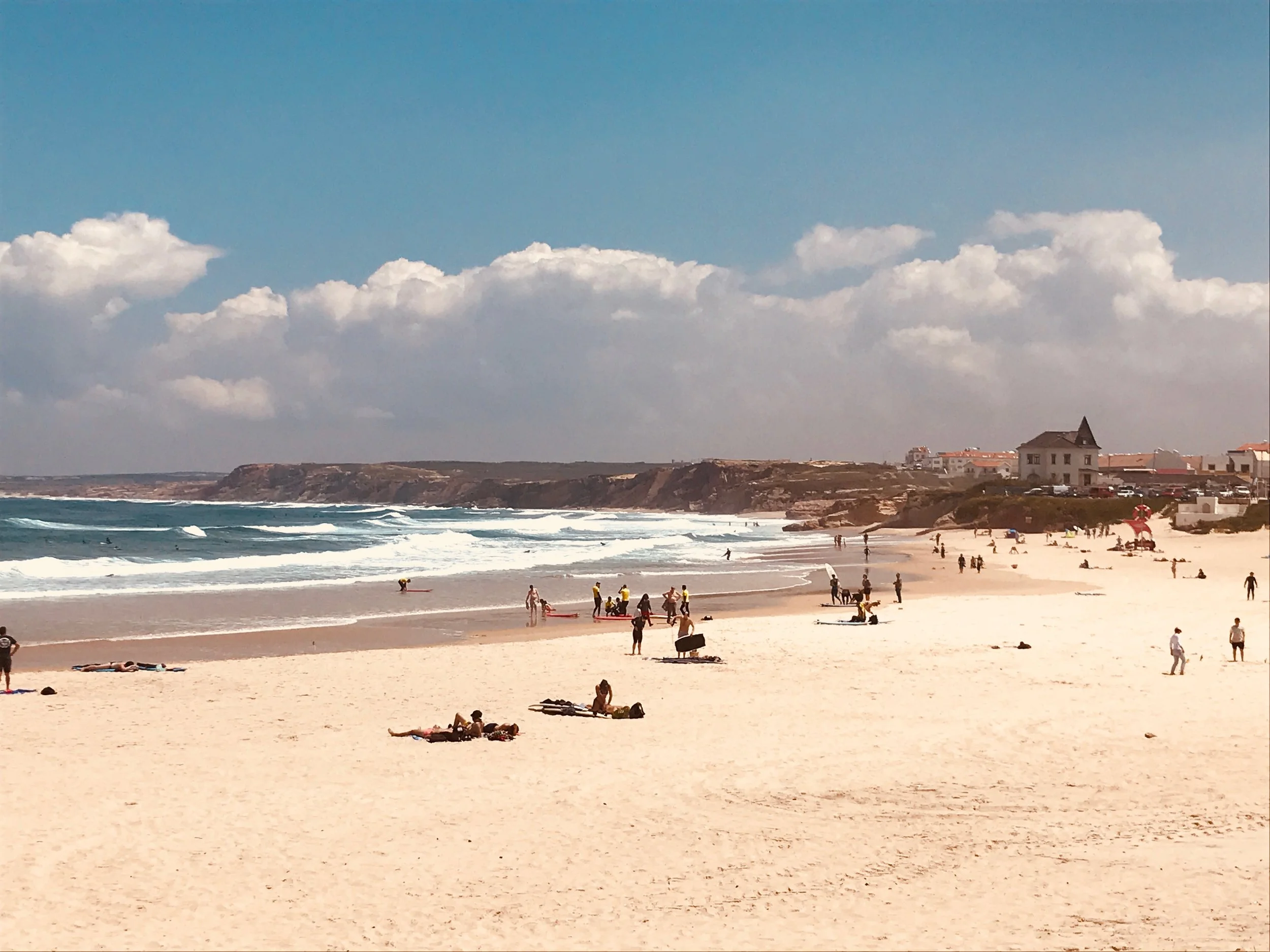
Just an hour north of Lisbon, the Silver Coast is worlds away from the stress and rush of modern life. The pace is very relaxed and there are beautiful beaches with very good waves if you’re into surfing. We stayed at an eco-friendly beach resort called Areias do Seixo right behind a sand dune & surrounded by pine trees. It’s a modern concrete & glass structure with a mix of whimsical crystals, Indian & Morrocan décor.  We stayed in the Love room and it was the biggest room I have ever stayed at in a hotel, with a giant terrace overlooking the hotel grounds. 

Worth getting out of bed for:

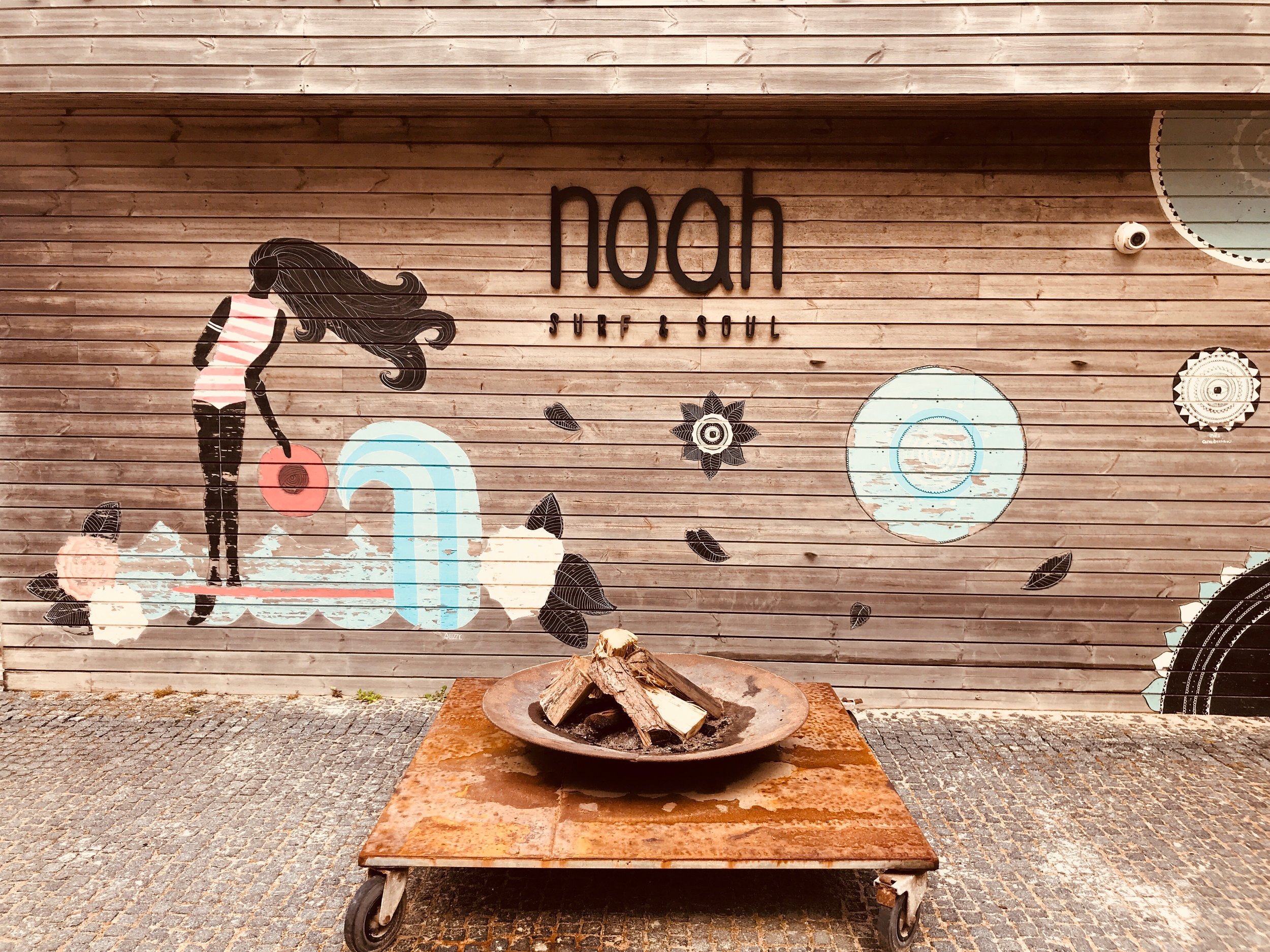
Walk down the cliff to the beach across from the hotel, and if the tide is low, walk south over the rocks and make your way to Fisica Beach in the nearby town of Santa Cruz. There is a great beach bar called Noah (same owners as Areias do Seixo) where you can grab a drink, a snack or lunch. Then you can take the vintage VW bus that shuttles guests back and forth from Noah to the hotel. 

Drive to Peniche, world-famous surfing spot where it is claimed it is possible to find a surfable wave no matter what way the wind is blowing. We stopped at the Baleal beach area & charming village. From Peniche you can take a boat across to the Berlengas island, a biosphere reserve, excellent for fishing and diving. But if you do that, set aside a full day. You can also continue driving north to Nazaré, another beach town that has gained international fame due to it colossal size waves, that can typically be seen from late October to March. 

EAT Noah [go back to Noah for dinner; good food & very chill ambiance] Taberna do Ganhão [at Baleal Beach for lunch] The Restaurant at the hotel [another great option if you don’t want to go anywhere]

Coimbra

Coimbra is the former capital of Portugal by the Mondego River with a well-preserved medieval old town and the oldest and largest university of Portugal - the University of Coimbra. It is not a must see, so I would not go out of my way to visit it, but if you’re in the area, it‘s worth a stop and a full day is enough time to get a feel for the city and see it’s highlights.

EAT Alqueire Comes e Bebes [charming small restaurant with very good food; great for lunch or dinner] Arcada Comes e Bebes[another good option just a few buildings down the same street]

STAY Sapientia Boutique Hotel[nice hotel within the old city walls right by the university; pretty good breakfast included]

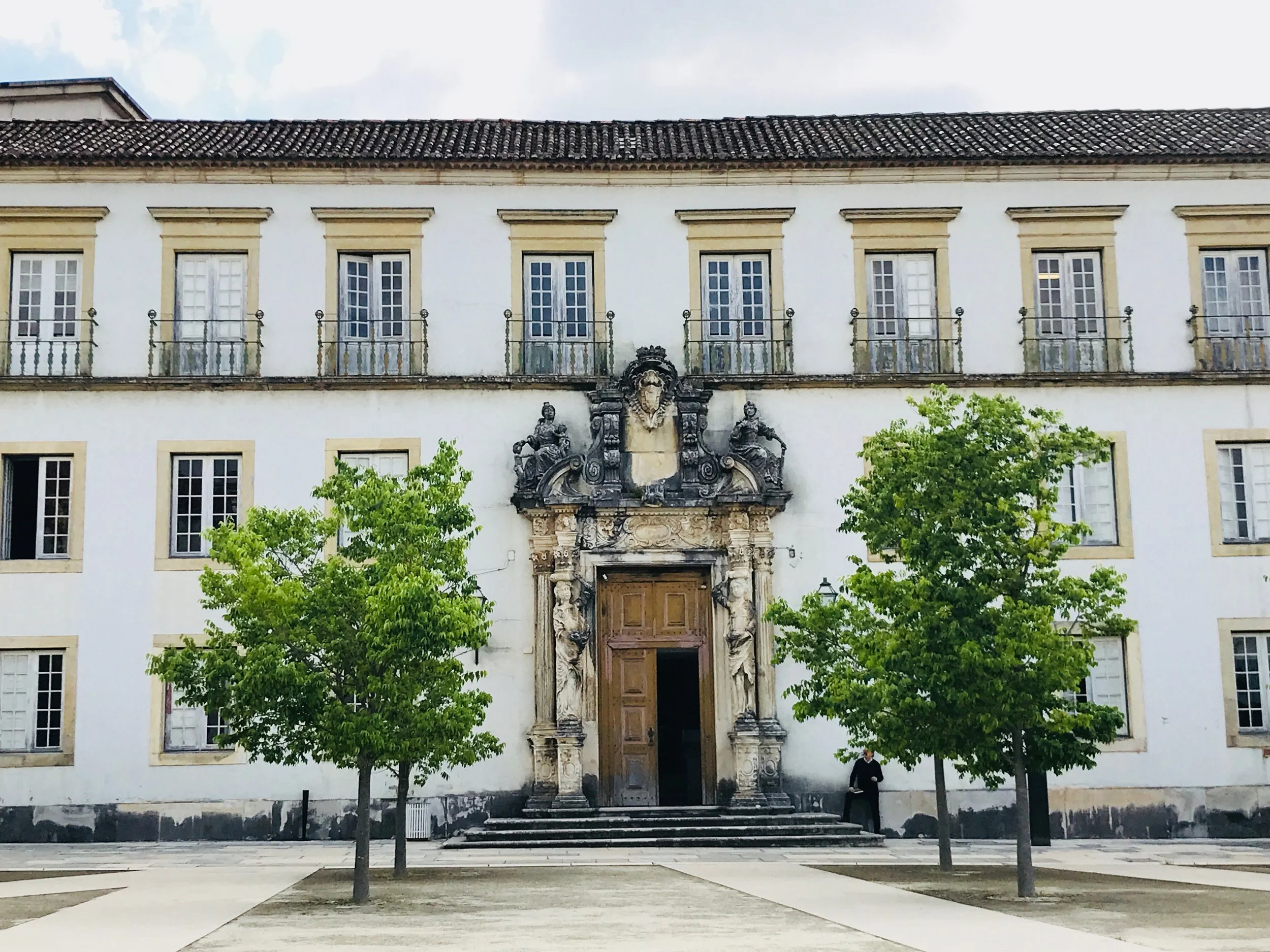
TO DOHire a guide for a day tour of Coimbra – www.gowalksportugal.com. The highlights of our tour: walking around the old town, the Botanical Garden, University of Coimbra including its famous Joanina Library & Rua Fernandes Tomas with its overhead crochet umbrellas. 

Piódão

On our way to Douro Valley, we detoured a bit and drove from Coimbra to Piódão through the Serra do Açor. It is a protected landscape area that unfortunately has been badly burned during the 2017 wildfires that burned the Portuguese countryside for days. The road is extremely windy but worth the drive even if parts of the landscape have been burned. It’s still extremely scenic with terraced farms along the steep mountain slopes, stone buildings & charming villages. 

Buried deep in the Serra do Açor is the historical village of Piódão with narrow winding streets & buildings made of schist, a stone found in great abundance in the area. The whole village is a large patch of uniform grey/brown color only interrupted by the vivid blue of the windows or doors. 

I recommend the walk from Piódao to Foz d'Egua, which is a very pleasant 3km walk that will lead to a small swim hole. Note that it’s only swimmable in the summer since a temporary dam is built to create the fluvial pool. 

Portugal Part 4 - Algarve - 2018

Western Algarve

ALJEZUR [perched on a hill with the remnants of a castle up top and a cascade of white houses down the hillside towards the river, this is a charming village and where I recommend staying for a few nights since the beaches in this area are stunning]

BORDEIRA BEACH [large sandy beach surrounded by limestone cliffs and pristine dunes, on the mouth of the Ribeira da Bordeira river. From the parking lot, there is a dirt track that leads to a wooden path, and after that you will need to cross the shallow river on foot to get to the beach. You will have the beach pretty much to yourself]

AMADO BEACH [this is one of Portugal’s premier surfing beaches with its own surf school on site. It’s backed by sand dunes with cliffs on both sides]

PEDRALVA [fully restored tiny traditional rural village, that until not long ago was in total disrepair with only 9 inhabitants left.  It now has a Gourmet Grocery and two restaurants Pizza Pazza Pizzeria and Sitio da Pedralva, Worth a quick stop or a a few-nights stay]

 STAY Muxima [guest house near Aljezur with a rustic charm inspired by the owner’s love for Africa]

Southern/Central Algarve

LAGOS [a relatively big town in comparison to the villages we have visited while driving down the coast. It has a walled old town and jagged cliffs overlooking sandy coves. While I believe it was a charming place at one point, my husband and I did not care much for it. Felt very touristy, with uninteresting shops, restaurants where menus are on the sidewalk and hosts keep inviting you in and neon bars with bad lighting. The beaches in the area are quite beautiful but pretty busy. But if you are in the area, our favorite beach was Camilo. Also nearby is Farol da Ponta da Piedade where everyone recommended we should watch the sunset from. We, however, loved our hotel (see below) and ended up spending a lot of time there]

STAY Casa Mãe [a rustic, chic hotel in the old town. We booked the Cabana room – Oeste was it’s name – and highly recommend it. One of my favorites rooms ever in a hotel. Surrounded by a beautiful vegetable garden, a pool, and a beautifully renovated white mansion, original to that site. It has its own little patio & hammock]

EAT Orta [the restaurant at Casa Mãe – fresh produce from their garden, creative dishes and delicious]

We skipped the rest of the Alrgave coast from Lagos until Olhão, which is right after Faro. This area is too developed and populated. We spent our time in Eastern Algarve, as described below, and that was the right decision. 

Eastern Algarve

OLHÃO [town that it’s life revolves around the sea. Fishing has always been the typical livelihood of its inhabitants and the seafood market is the best I have ever seen. The abundance of fish of every size and shape, shellfish, octopus, squid, eel is astounding. We went there on a Saturday and that is a special day when small producers from the Algarve hills arrive at the market to sell their fruits and vegetables. From Olhão you can take a boat to visit the RIA FORMOSA NATURAL RESERVE, an intricate network of ponds, canals, salt mines and sandy fields separated from the Atlantic by a group of sandy islands that stretch from Faro to Cacela Velha. Unlike any place I have ever been. There are many options of islands to go spend the day ay and we picked ARMONA. Ferris run from Olhão’s harbor to Armona, but there are also water taxis. A more expensive option but not restrictive schedule-wise. We chose the latter. In 15 minutes you get to Armona, a pedestrian-only fishing village. You have to walk for 20 minutes across town to get to the really beautiful beach, and it’s worth the trek. Miles and miles of white sandy beach with very few people. Heaven! There’s a beach bar right on the sand, the only one, and while the food is nothing to remember, it’s a great spot for a drink] 

STAY Fazenda Nova Country House [beautifully renovated farmhouse, a true work of love by a British couple. The Garden Rooms are spectacular, tranquil environment by a saltwater pool by the olive tree grove, great staff, however the food is pretty weak]

EAT Casa do Polvo [in Santa Luzia, about a 20-minute drive from the hotel, considered the capital of octopus. This restaurant is specialized in octopus, but has other seafood options as well]

BARRIL BEACH [from Pedras D’Rei the beach can be accessed by a 1.5km walk through the Ria Formosa Nature Reserve. There is a small train for those who don’t want to walk. It’s a beautiful & long white sandy beach, a bit more popular than Armona since access is a bit easier. As you arrive the first thing you will notice is an Anchor Graveyard, left by tuna-fishing boats over the years]

TAVIRA [the loveliest city we visited in the Algarve – a blend of old, elegant buildings, cobbled streets and squares, traversed by the Gilão river and it’s old bridge. Tavira still maintains an atmosphere of a traditional, typical Algarve fishing village]

STAY Pensão Agrícola [this is a special place! Rui, the owner and host, acquired this property in complete disrepair and restored it into a small hotel with only 6 rooms. It’s paradise with white simple buildings filled up with antiques and surrounded by tranquil green fields. . You can rent their Vespa for the day or get toured around with their TukTuk. Charming does not even start to describe this place]

EAT TAVIRA Aquasul [in a narrow alley, this nice little restaurant serves a delicious variety of food. If you can, get a table on the alley or the terrace. Make sure to make reservations] O Castelo [for meat lovers this is a great place run by a Brazilian. Reservations are recommened] CABANAS Noélia e Jerônimo [serves delicious seafood & reservations are a must] 

CACELA VELHA [Unesco Heritage site astonishing views of the Formosa Lagoon river and the Peninsula of Cacelha Velha. There’s also a beach in Cacela Velha, that can be accessed by boat or you can drive to the next town over, Manta Rota and walk along the beach westward and you will get to Cacela Beach]